
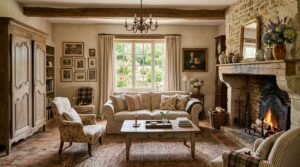
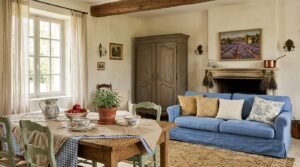
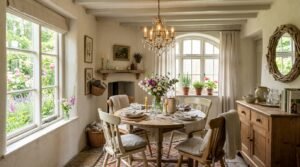
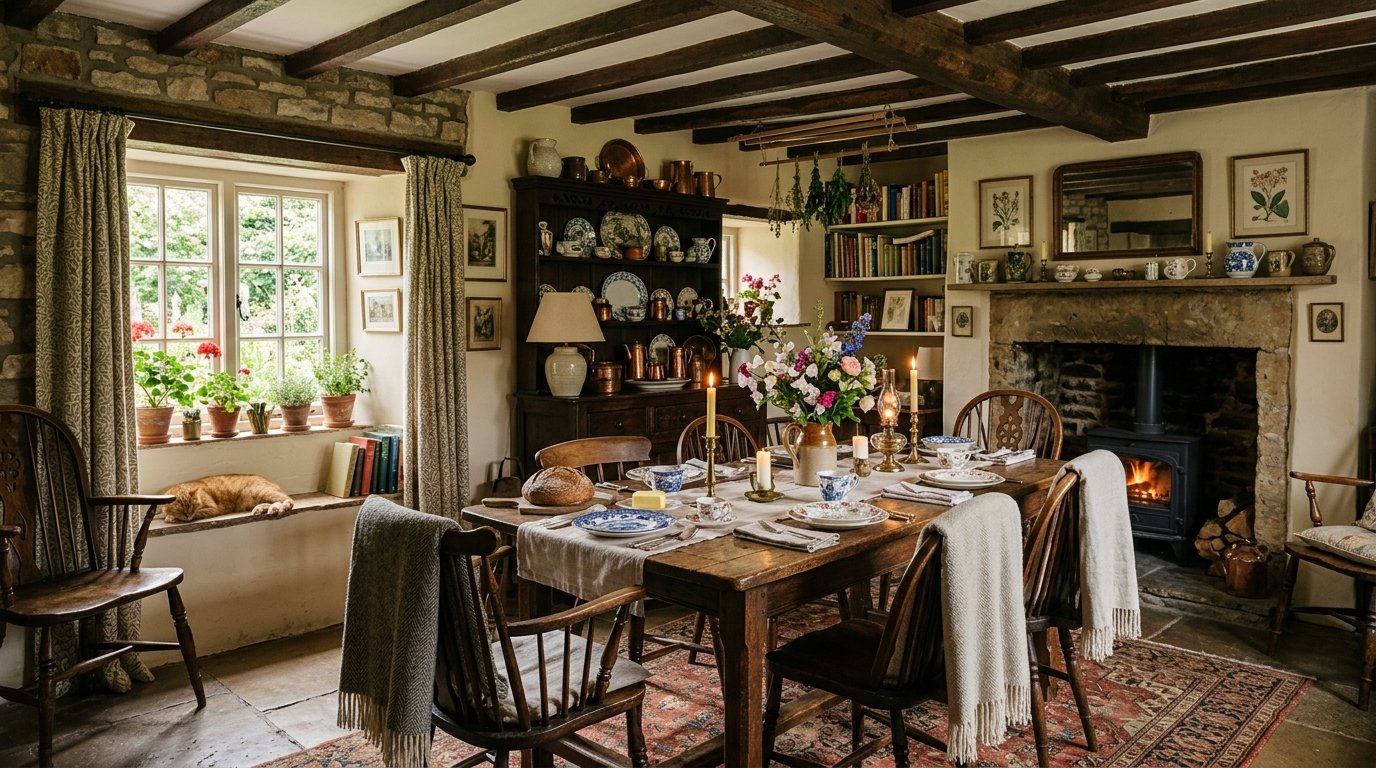
You think you want an English cottage dining room, but what you actually want is that soft, time worn charm that looks accidental and not bought in one afternoon. It’s not just a cottage style dining room, it’s a feeling that your grandmother might have argued about paint colors in, and then ignored the argument and brewed tea instead.
There’s something stubbornly comforting about English country decor, the way it refuses to be sleek. You won’t find glossy perfection here. You find scratches. Layers. A chair that wobbles just slightly but nobody replaces it because that’s its personality.
And yes, people are craving this look again. Interior trend reports from the last few years show a strong rise in searches for cottagecore interiors, traditional dining rooms, and vintage farmhouse dining tables. Pinterest reported a significant jump in cottage inspired home searches around 2023 and it hasn’t exactly cooled down. Which honestly makes sense, considering how many of us are tired of blank white boxes that echo when you sneeze.
What Actually Makes an English Cottage Dining Room
It’s not one single thing. That would be too easy.
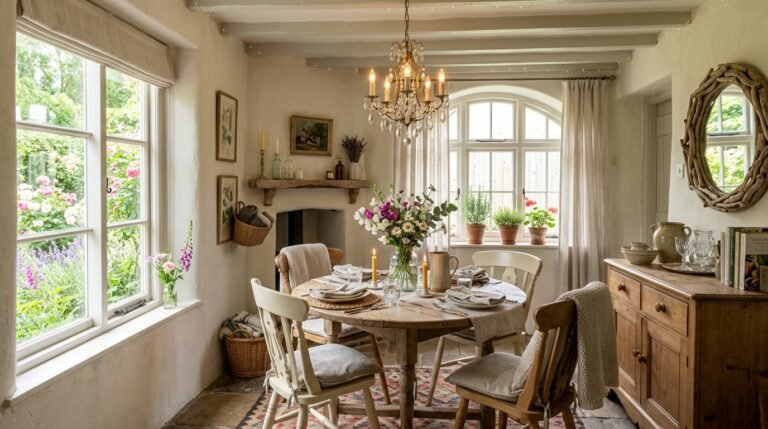
An authentic English cottage interior leans into imperfection. Exposed beams if you have them. If you don’t, maybe you fake it a little, and that’s fine, nobody is inspecting your ceiling with a clipboard.
You’ll usually see
• A solid wood farmhouse dining table, often oak or pine
• Mismatched wooden chairs, sometimes painted
• Soft, slightly faded floral textiles
• A dresser or hutch filled with plates that don’t match on purpose
Historically, cottages in rural England were modest homes, often built from stone or brick, and dining spaces were practical rooms. They weren’t staged for magazines. Meals happened there three times a day, boots by the door, dogs under the table. That practicality still shows up in the design.
And if you’re wondering whether this style is still relevant, well, the Office for National Statistics in the UK has reported that older housing stock from pre 1919 still makes up a notable portion of English homes. Many of those properties retain traditional interior details, beams, fireplaces, deep window sills. The aesthetic is rooted in real architecture, not a social media filter.
The Table Is the Boss of the Room
Let’s be honest, the wooden dining table runs the show.
In a true English cottage dining room, the table is usually sturdy, sometimes chunky, occasionally scarred. You want visible grain. Knots. Evidence of life. A high gloss lacquered thing would feel out of place, like someone wore patent leather shoes to a muddy garden.
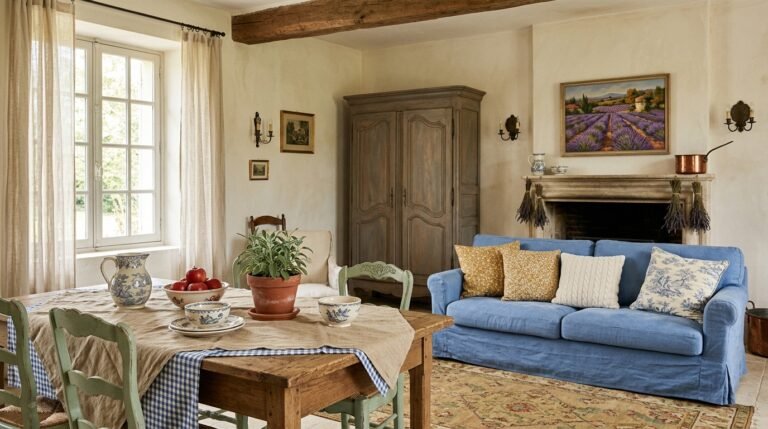
Oak has been widely used in British furniture for centuries. It’s durable, heavy, and ages beautifully. Pine is more humble but equally charming, especially when painted in muted tones like sage, duck egg blue, or a soft cream that isn’t too creamy.
You might think you need matching chairs. You don’t. Honestly, matching chairs can feel a bit try hard here. A mix of ladder back chairs, a bench on one side, maybe one slightly ornate chair at the head. It feels collected over time. Because ideally, it is.
Colors That Feel Like the Sky Might Rain Later
The color palette in English country dining rooms tends to be gentle but not bland.
Muted greens. Dusty blues. Warm creams. The kind of red that looks like it’s been around since 1890.
The popularity of heritage paint shades has grown significantly in recent years. Traditional British paint brands often base their colors on historical pigments used in the 18th and 19th centuries. Those shades feel grounded, not loud.
Floral wallpaper shows up often. And not the minimal kind. Proper florals. Roses, vines, tiny blossoms climbing the walls. Some people hesitate because they think it’s too much. But when paired with simple furniture, it works. I once saw a dining room with bold chintz wallpaper and a plain scrubbed pine table, and somehow it balanced itself out like it had rehearsed.
Textiles, Because Bare Rooms Feel Lonely
A cottage dining room without textiles feels unfinished, like someone forgot the punchline.
You’ll want linen tablecloths, maybe slightly wrinkled. Cotton curtains that let light through but soften it. Seat cushions tied onto wooden chairs.
Floral patterns are common, yes, but so are stripes and small checks. Mixing them is part of the charm. You layer. You don’t coordinate obsessively. If two patterns clash a bit, sometimes that’s better.
Historically, rural English homes made use of locally woven fabrics. Simplicity mattered. Durability mattered more. That practicality is why natural fibers like linen and cotton still dominate the look. They age well. They wrinkle. They feel real.
The Hutch, The Plates, The Slight Chaos
Storage in an English cottage dining room is often visible.
A wooden dresser or glazed cabinet filled with ceramic plates, teacups, serving bowls. Not a pristine display. More like a working collection. Blue and white transferware is common, especially pieces inspired by 18th century British ceramics.
Ceramic production has deep roots in England, particularly in regions like Staffordshire. The tradition of everyday yet decorative tableware is tied to that history. So when you stack patterned plates in open shelves, you’re echoing something centuries old, even if you bought them last year.
And don’t line them up like soldiers. Stagger them. Lean a platter at the back. Let it feel a little accidental.
Lighting That Feels Slightly Moody
Lighting in a traditional cottage dining room should feel soft, almost like you forgot to change the bulb to something brighter.
A wrought iron chandelier works beautifully. So do simple pendant lights with fabric shades. Wall sconces with warm bulbs. Candlesticks on the table, even if you only light them occasionally.
Before widespread electrification in rural England, homes relied on candles and oil lamps. That softer glow shaped how interiors felt. Harsh overhead lighting breaks the illusion. Keep it warm. Slightly dim. Cozy.
Fireplaces and Architectural Details
If you’re lucky enough to have a fireplace in your dining room, use it. Even if it’s decorative.
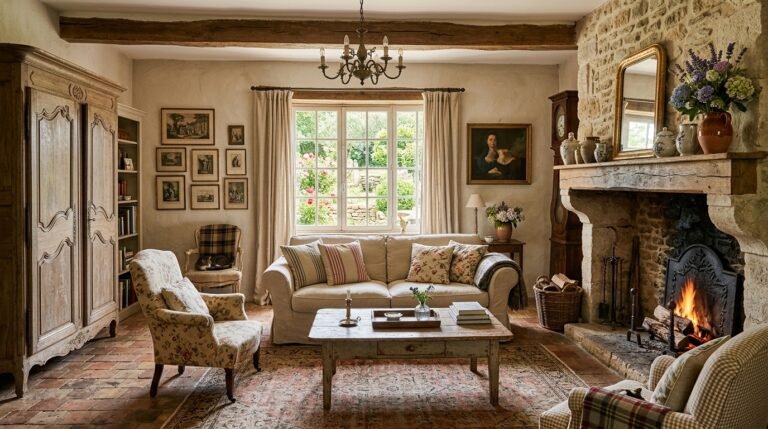
Stone surrounds, brick hearths, wooden mantels. These details ground the space. Many English cottages historically centered rooms around fireplaces, not just for heat but for gathering. The dining table near the hearth makes sense. It always did.
Exposed wooden beams add depth. Uneven plaster walls too. Perfection can feel sterile. A little texture helps.
Small Details That Matter More Than You Think
You know what really sells the English cottage decor vibe? The small stuff.
A vase of slightly drooping garden flowers. A ceramic pitcher holding wooden spoons. Framed botanical prints that look like they came from an old book.
Botanical illustration became especially popular in Britain during the 18th and 19th centuries. Prints of plants and flowers were common in middle class homes. So adding a few framed prints is historically appropriate, not just trendy.
Also, books in the dining room. Maybe that sounds odd. But a small stack on a sideboard feels right. Lived in.
Modern Life Inside an Old Soul
Here’s the thing though. You probably don’t live in a 17th century stone cottage in the Cotswolds. Most of us don’t.
But you can borrow the mood.
Use reclaimed wood for your table if possible. Choose antique or vintage pieces when you can. Mix new with old. Keep the room functional. The original cottages were practical spaces first, aesthetic statements second.
Sustainability also plays into this. The UK has seen growing interest in reclaimed materials and vintage furnishings, partly because reusing furniture reduces waste and carbon footprint compared to buying new mass produced items. So choosing an older sideboard is not only stylistic, it’s responsible.
It Should Feel Personal, Not Perfect
If I’m honest, the best English cottage dining rooms I’ve seen are slightly messy. Not dirty. Just lived in.
A table that always has something on it. A chair pulled out. A dog bowl tucked in the corner.
You’re not staging a catalog. You’re building a room where people linger after dinner, arguing about politics or laughing too loud or pouring one more cup of tea.
That’s the point.
If your cottage style dining room feels too polished, you’ve probably overdone it. Add something unexpected. A chipped bowl. A crooked picture frame. Something that says people actually sit here.
Because at the end of the day, an English cottage dining room isn’t about copying a look. It’s about creating a space that feels layered, warm, a bit stubborn, and very human.
And if one chair creaks when you sit down, well. That just means it has stories.