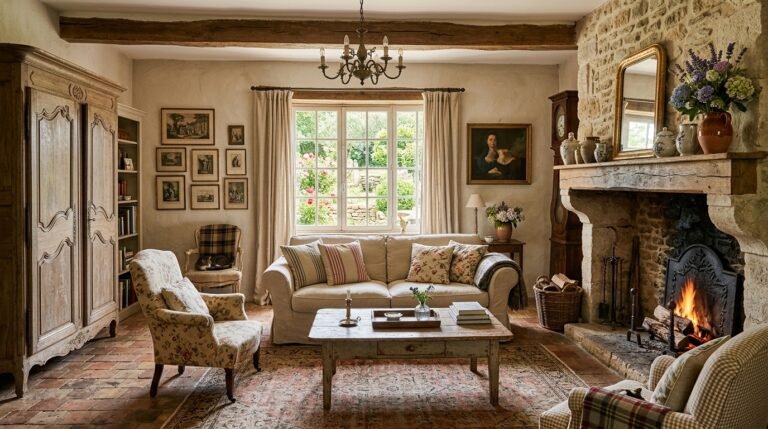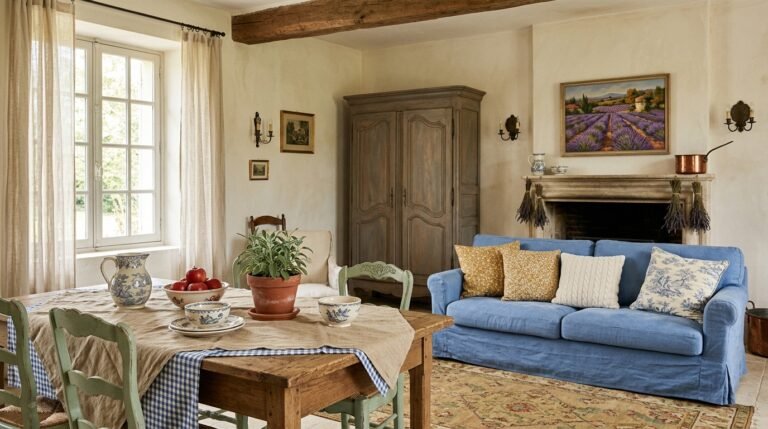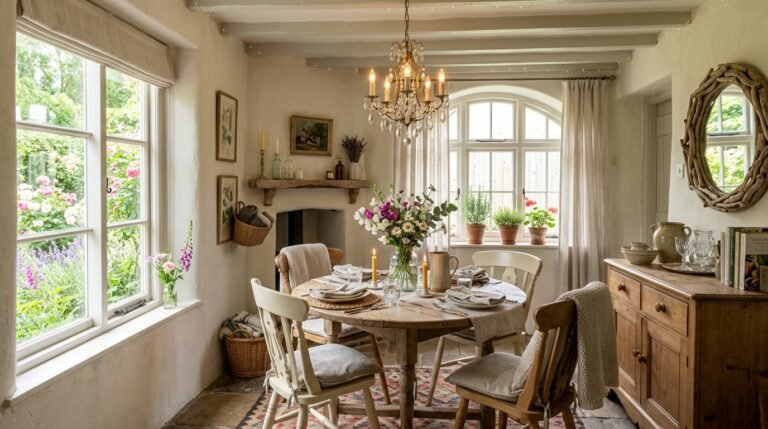
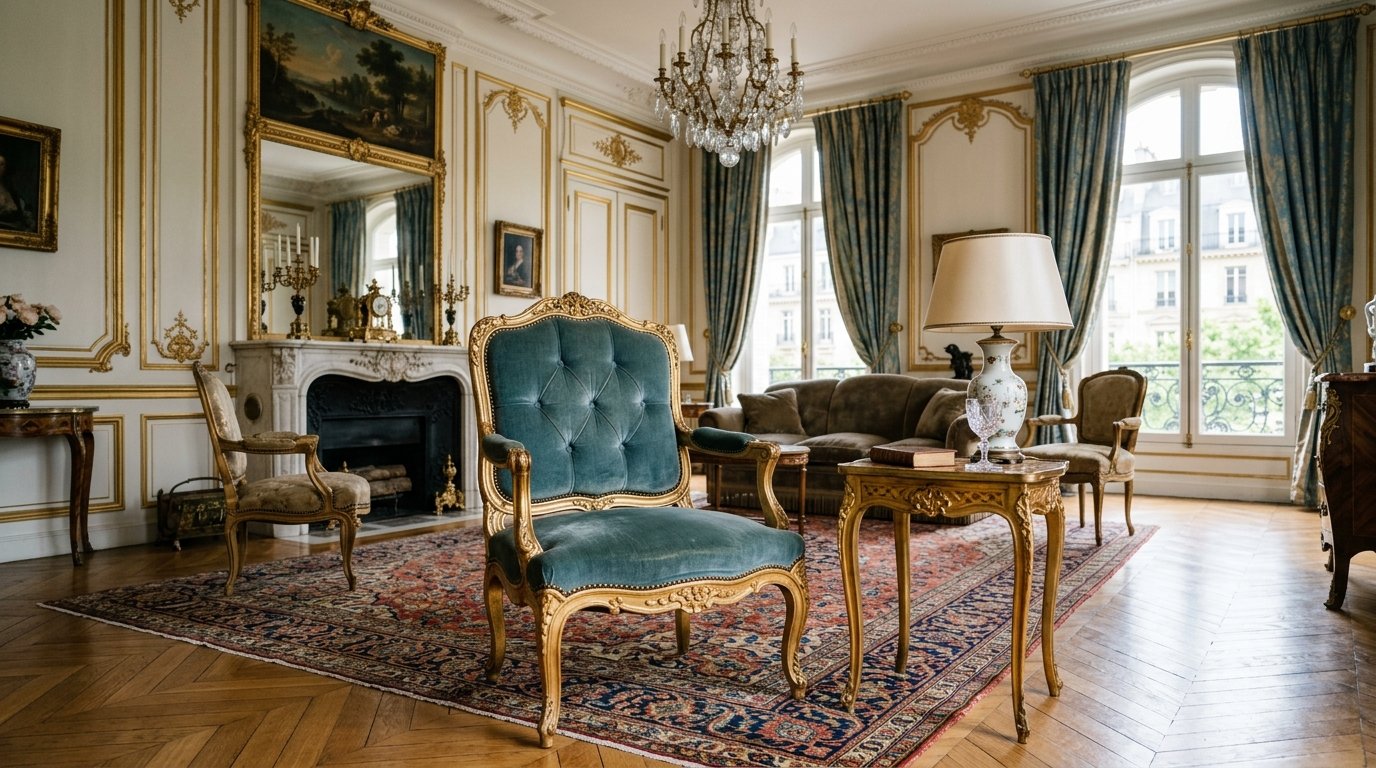
You love French country design, I know you do. Soft linens, chipped paint, that slightly faded blue cabinet you saw on Pinterest at 2 am. But somewhere between romantic farmhouse dreams and reality, things go sideways. Not dramatically, just enough to make the room feel… staged. Like it’s pretending to be in Provence but actually lives in a suburban cul de sac with a three car garage and LED flood lights. It happens.
And honestly, you are not alone. Interest in French country interiors has surged again over the past few years, especially after the rise of modern farmhouse and cottagecore aesthetics. Pinterest trend reports have repeatedly shown increased searches for rustic kitchens and antique inspired furniture. People want warmth. Texture. History. But wanting it and getting it right are not the same thing, not even close.
Let’s talk about where it usually goes wrong.
You Overdo the Distressing in Rustic Furniture
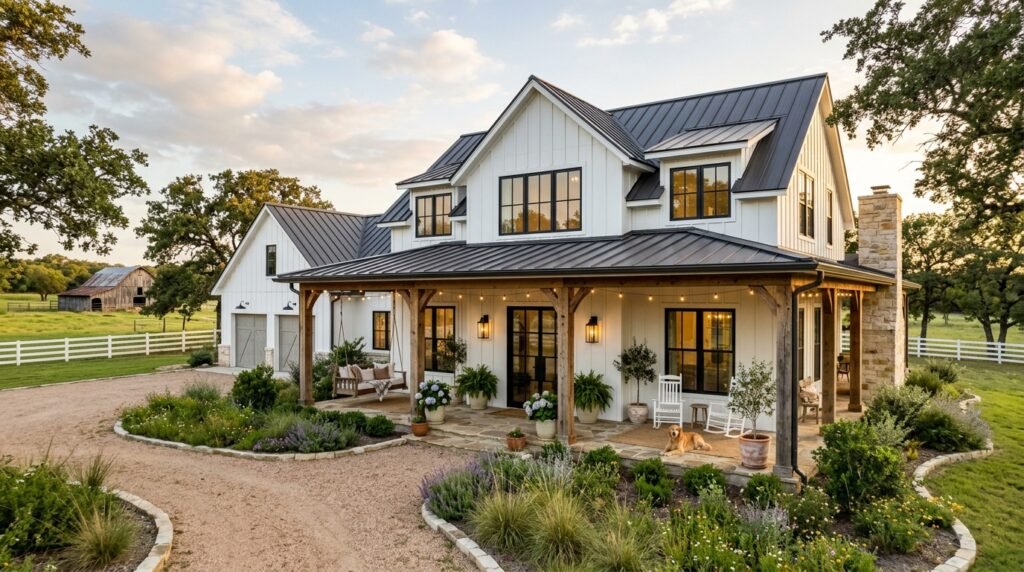
There is distressed. And then there is assaulted by sandpaper.
In authentic French provincial furniture, wear happens naturally over decades. Oak armoires, farmhouse tables, carved buffets, they age because people live with them. In rural regions of Normandy or Provence, pieces were practical first, decorative second. Scratches came from use, not from a weekend DIY experiment gone wild.
When you aggressively distress every surface, every chair leg, every cabinet edge, the room starts to look like a theater set. A little wear on a painted Louis XV style chair can feel charming. A whole dining room that looks dragged behind a tractor, not so much.
I once saw a kitchen where even the refrigerator panels were faux chipped. It felt… tired. Like the house was cosplaying as a barn.
Subtlety is the trick, even if you hate that word.
You Think French Country Means Everything Is Beige
There is this persistent myth that French country decor equals cream on cream on more cream. Beige walls, beige sofas, beige curtains, beige everything. Yes, neutral palettes are common. But not lifeless ones.
In actual rural French homes, color exists. Muted blues inspired by the sky over Provence. Soft sage greens. Warm buttery yellows. Terracotta tiles. Real patina. The light in southern France is intense and clear, and interiors respond to that with depth, not blandness.
According to color trend data from major paint brands, blue and green tones consistently rank among the most popular interior colors year after year. That’s not random. Humans crave balance and softness.
When your version of French country looks like a bowl of oatmeal left out too long, something is off. Add depth. Add contrast. Or at least one piece that feels like it has a pulse.
You Confuse French Country With Farmhouse
This one stings a little.
Modern farmhouse, popularized by designers like Joanna Gaines, overlaps with French country in obvious ways. Rustic wood beams, apron sinks, vintage touches. But they are not twins. They are distant cousins who borrow clothes without asking.
French country leans more ornate. Curved lines. Carved details. Gilded mirrors that look slightly tarnished. Farmhouse often goes cleaner, more simplified, with shiplap and black metal accents.
When you mix galvanized metal buckets, sliding barn doors, and overly industrial light fixtures into a supposed French provincial space, the room starts arguing with itself. You can feel the tension. Like two design eras refusing to sit at the same table.
Pick a direction. Or blend carefully, but with intent. Random layering rarely works.
You Buy Everything New and Expect It to Feel Old
This one is painfully common.
You walk into a big box store. They have an entire French country collection. Matching bed frame, matching dresser, matching nightstands. All perfectly coordinated. You think, this will make my life easy. And yes, it will. But easy is not always beautiful.
Authentic rural French interiors evolved over time. Pieces were inherited, repaired, repainted, reused. Nothing matched in a catalog sense. It matched emotionally.
Surveys from home design associations show that consumers increasingly value vintage and secondhand furniture. Not just for sustainability, though that matters, but for character. When every item in your space looks like it arrived on the same truck, the room loses that layered history.
You need at least one item that feels slightly out of place. A flea market find. An old trunk. A chipped ceramic pitcher that no one else has.
Otherwise it’s showroom pretty. Which is different from lived in pretty.
You Ignore the Architecture of Your Own House
Here’s the awkward truth. Not every home wants to be French country.
If you live in a sleek high rise condo with floor to ceiling glass and polished concrete floors, forcing heavy carved armoires and ornate chandeliers into that shell can feel strained. French country design grew out of stone farmhouses, plaster walls, wood beams. The bones matter.
Data from housing reports in the United States show that a large percentage of new builds lean modern or contemporary in structure. Clean lines. Open plans. Minimal trim. When you layer heavily traditional French provincial details into that kind of architecture, sometimes it works. Often it feels pasted on.
You don’t have to give up on the aesthetic. But you may need to soften it. Use textures instead of heavy ornamentation. Linen curtains. Woven baskets. A single antique mirror instead of five.
Let the house breathe in its own accent.
You Overload the Room With Decorative Props
Lavender bundles. Rooster figurines. Wicker baskets. Scripted wall art in French that you can’t actually read. It starts charming. Then it tips into themed restaurant territory.
French country style is not a costume party.
In actual homes across rural France, decor is practical. Copper pots hang because they are used. Baskets store produce. Linen tablecloths get washed and reused. When you scatter decorative objects purely for effect, the space can feel cluttered.
Clutter statistics from professional organizing groups indicate that visual overload increases stress and reduces satisfaction with living spaces. Even in cozy styles, breathing room matters.
If you have three rooster sculptures, maybe keep one. Let him stand proudly. The others can retire.
You Forget That Comfort Is Non Negotiable
Here is the thing people skip. French country is cozy. Deeply so. Upholstered chairs. Cushions. Thick wood tables that invite elbows and laughter and long dinners.
If your chairs look beautiful but feel like punishment after twenty minutes, you missed the point. If your sofa is too delicate for actual living, what are you doing.
In surveys about home satisfaction, comfort consistently ranks above visual appeal. People want rooms they can use, not just photograph.
French country style should feel like you could sit down with a glass of wine and lose track of time. If it feels stiff or precious, something went sideways.
You Chase Trends Instead of Understanding the Roots
Trends are loud. They shout from social media feeds. Suddenly everyone wants white slipcovered sofas and rustic chandeliers. Then next year, everyone wants darker moody cottage tones. It shifts fast.
But French country design has centuries behind it. Influences from Louis XV and Louis XVI furniture styles, rural craftsmanship, Mediterranean climate, regional materials like limestone and oak. When you skip the history and just copy a trending image, the result feels thin.
A little research goes a long way. Understanding why certain shapes are curved, why certain colors repeat, why linen matters in a warm climate. It grounds your choices.
You don’t need a design degree. Just curiosity. And maybe patience.
So What Should You Actually Do
This is the messy part. There is no rigid formula.
Start smaller than you think. One antique piece. One textured rug. A slightly imperfect ceramic lamp. Layer slowly. Let the room tell you when it’s enough. Or when it’s too much.
French country design mistakes happen when you rush, when you over commit, when you confuse theme with atmosphere. The style is romantic, yes. But it’s also grounded. Practical. Lived in.
And maybe that’s the real test. When someone walks into your home, it shouldn’t feel like a photo shoot. It should feel like you just stepped out to the garden and left the door open.
If it feels like that, you probably did it right. If it feels like a movie set about rural France, well… maybe sand down less next time.