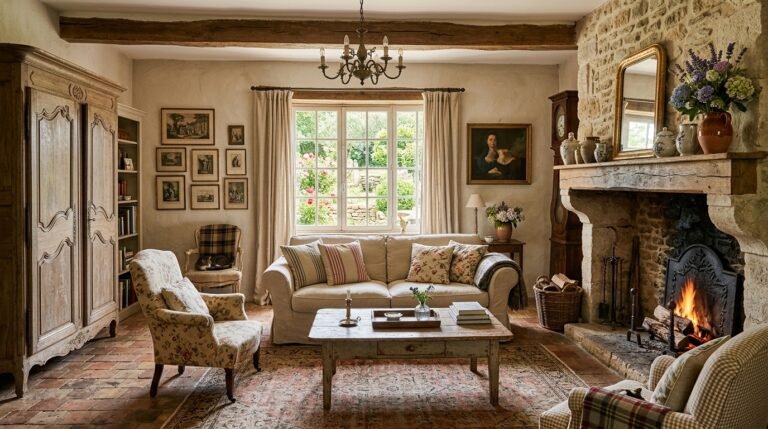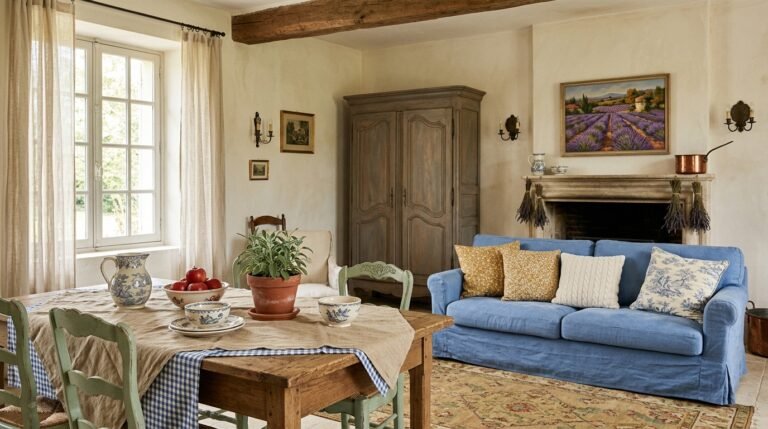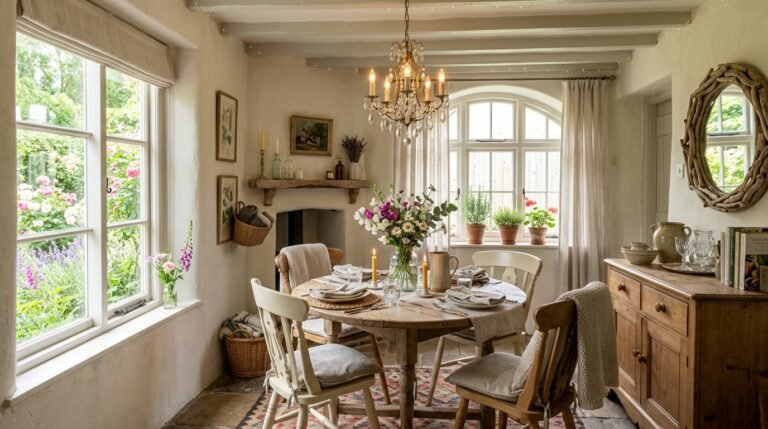
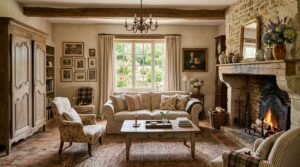
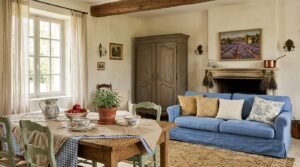
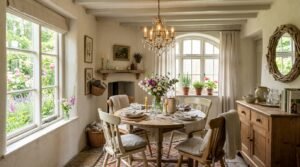
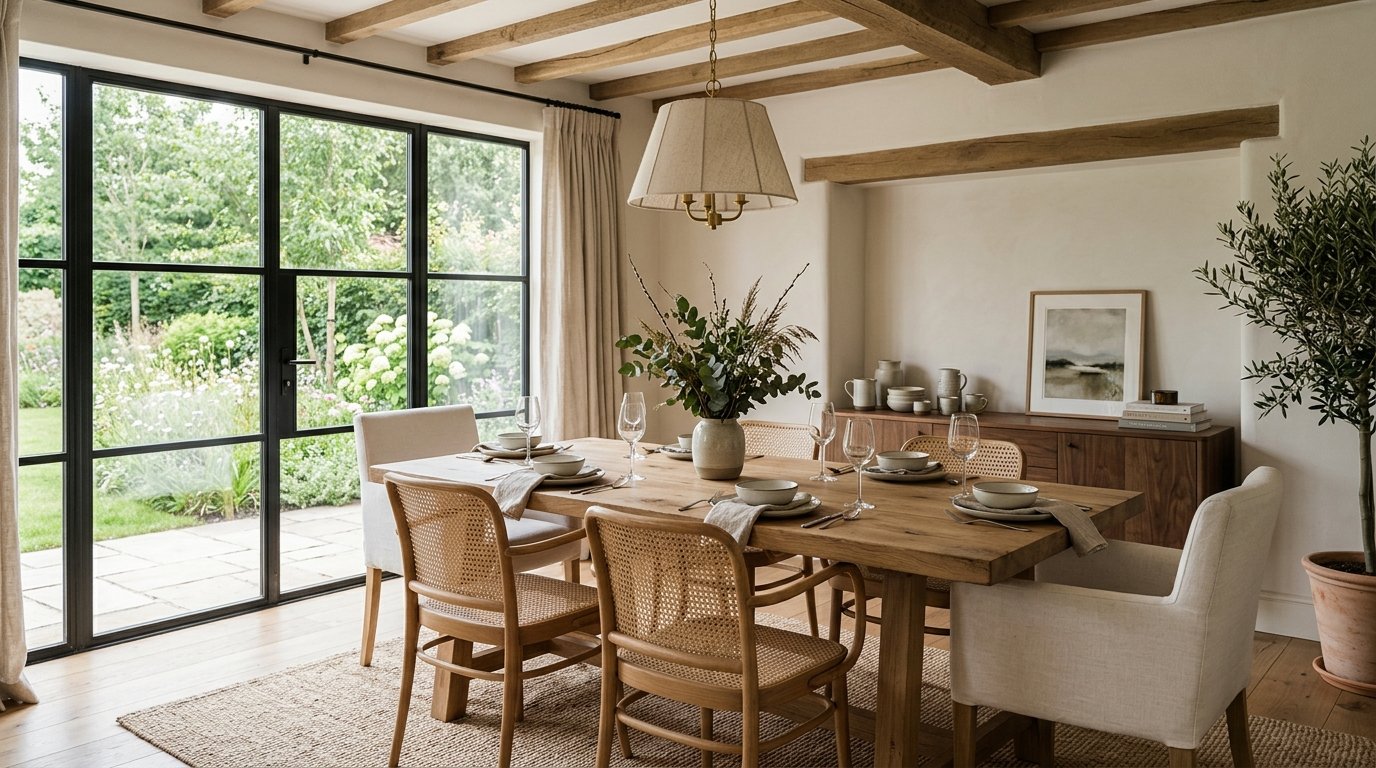
You keep seeing the phrase modern cottage dining room everywhere, and maybe you roll your eyes a little, I did too at first. It sounds like a mash-up somebody made at 2 a.m. after scrolling too long. But then you notice it. The warmth. The wood that looks slightly imperfect. The chairs that don’t match but somehow hold hands across the table. And suddenly you’re saving photos like a squirrel before winter.
A cottage dining room used to mean florals, fuss, and maybe too many teacups. Now it’s softer. Leaner. Less doily, more depth. It keeps the soul of cottage style interior design but trims the clutter. There’s restraint, but not coldness. That balance is tricky, and you feel it when you walk in.
Let’s wander through it, bit by bit, without making it too tidy. Because honestly, this style doesn’t like being over-explained.
What Actually Makes It “Modern Cottage”
You can’t just throw a farmhouse table into a white room and call it a day. That’s how you end up with a confused farmhouse dining room instead. Close cousin, yes. Same person, no.
A modern cottage dining room usually leans on:
• Natural wood tones, often oak or pine, sometimes slightly weathered
• Soft color palettes like warm whites, muted sage, dusty blue, clay
• Simple silhouettes in furniture, nothing overly carved or fussy
• Vintage or vintage-inspired lighting
And then, the twist. Cleaner lines. Fewer patterns. More breathing space.
According to the National Association of Home Builders, dining rooms are still included in over 70 percent of new single family home plans, even though open concepts dominate. That tells you something. People still want a space that feels intentional. A table. A pause. A room where you sit and talk and pass the bread even if it’s just takeout.
The Table Is the Heart, Obviously
You already know the table matters, but maybe you underestimate how much.
In a modern cottage dining room, the table often feels grounded. Solid wood. Rectangular or oval. Sometimes a pedestal base if the room is small. You might lean toward reclaimed wood dining tables because they carry history in the grain, tiny scars, knots that look like constellations if you stare long enough.
Round tables soften tight spaces. Rectangular ones anchor longer rooms. And here’s a thing people forget. Scale. Designers often suggest at least 36 inches of clearance around the table for comfortable movement. Less than that and it starts to feel like musical chairs at Thanksgiving.
You don’t need matching chairs. In fact, mixing dining chairs has become more common. A bench on one side, spindle chairs on the other. Maybe even a slipcovered host chair at the head. It feels collected. Not showroom perfect.
Color Palettes That Whisper Instead of Shout
You won’t see neon here. Thank goodness.
Think warm white walls, like creamy ivory rather than stark gallery white. Then layer in muted tones. Sage green dining room walls are showing up more often lately, especially paired with light oak. Blue gray. Soft clay. Even a faded blush if you’re brave.
Paint brands have reported that earthy neutrals and greens are among their top sellers over the last few years. People are moving away from icy grays. They want warmth again. Something that feels human.
You might hesitate with color. I always do. But even painting just the lower half in a soft tone with simple wall paneling can shift the entire mood of a cottage dining room. It feels grounded. Slightly European. A little storybook, but not childish.
Lighting That Feels Honest
Lighting makes or breaks it. Truly.
A black iron chandelier in a modern cottage dining room can work, but keep it simple. No crystal waterfalls. A linen drum shade pendant is softer. Woven rattan pendants add texture without screaming beach house.
You want the light to feel warm, around 2700K if we’re being technical. Warmer bulbs reduce harshness and flatter wood tones. That detail alone can change the room more than a new rug.
And please hang the fixture at the right height. Around 30 to 36 inches above the table is the common recommendation. Too high and it floats awkwardly. Too low and your tall friend complains.
Textures, Because Flat Rooms Feel Sad
Flat rooms are boring. There, I said it.
A modern cottage dining room lives on texture. Linen curtains that move when the window is cracked open. A jute rug under the table. Maybe a vintage wool runner layered on top if you’re feeling bold.
You might think rugs under dining tables are impractical. They can be. But low pile or flatweave options hold up better and are easier to clean. Interior surveys have shown that area rugs remain one of the most popular decor updates in U.S. homes, partly because they instantly soften a space.
Add woven baskets in the corner. A ceramic vase that’s slightly uneven, handmade, imperfect. That imperfection is the charm.
Wall Details That Aren’t Trying Too Hard
You don’t need a gallery wall explosion.
One large vintage mirror. A landscape painting with muted tones. Maybe simple shiplap dining room walls but painted the same color as the trim so it doesn’t scream farmhouse. Subtlety matters here.
Wainscoting works beautifully in a cottage style dining room. It adds architectural interest without clutter. And it makes the space feel established, like it’s been there longer than you have.
Open shelving? Carefully. Too much and you drift into clutter territory. A few ceramic plates, stacked bowls, maybe an antique pitcher. Leave space between objects. Let them breathe.
Modern Cottage Meets Small Dining Rooms
Small spaces are actually perfect for this style. Oddly enough.
A small cottage dining room can use a round pedestal table, light colored chairs, and a simple pendant to avoid visual heaviness. Mirrors help bounce light. So do sheer curtains instead of heavy drapes.
According to U.S. Census housing data, the average size of new single family homes has fluctuated but dining rooms themselves are not growing dramatically larger. Which means most people are working with moderate space, not ballrooms. So you’re not alone if your dining area feels tight.
Use vertical space. Wall hooks. Narrow sideboards. Slim profile cabinets. Keep the palette cohesive so it doesn’t feel chopped up.
Mixing Vintage With New Without Making It Weird
This part trips people up.
You don’t want it to look like a time machine malfunctioned. The trick is balance. Pair a clean lined modern table with vintage spindle chairs. Or use a contemporary light fixture over a reclaimed wood table.
Antique stores and flea markets are goldmines. And yes, sometimes overpriced, I know. But even one authentic vintage piece changes the energy. It tells a story you didn’t buy yesterday.
The modern cottage dining room thrives on contrast. New meets old. Smooth meets rough. Clean meets worn.
The Role of Nature, Always Nature
Fresh greenery matters more than you think.
A bowl of pears. Eucalyptus branches in a ceramic jug. Seasonal flowers. These little gestures soften everything. Biophilic design principles suggest that incorporating natural elements into interiors supports well being and reduces stress. That sounds lofty, but honestly, it just feels nice.
Wood floors. Stone accents. Linen table runners. Even imperfect plaster walls if you’re ambitious. Nature tones down the room. It makes it feel lived in.
Why This Style Keeps Growing
People are tired. That’s part of it.
Minimalism felt strict for a while. Hyper modern spaces can feel cold. On the other end, heavy traditional rooms feel dated to some. The modern cottage dining room sits in between. Warm but uncluttered. Comfortable but not sloppy.
Interior trend reports over the last few years consistently mention “cozy minimalism” and “warm modern” as rising preferences. You can see it in furniture lines, paint launches, even in the way home decor retailers stage their showrooms now.
It’s not about perfection. It’s about feeling like you can actually sit down, exhale, maybe spill a little wine and not panic.
Practical Tips Before You Rearrange Everything
Measure twice. Truly. Dining rooms have traffic patterns that matter more than you realize.
Keep 24 inches of table width per person for comfortable seating. Leave enough clearance for chairs to slide out. Test paint samples in different light times, morning and evening. Warm tones shift more than you think.
And maybe don’t buy everything at once. Let the room evolve. Add a piece, live with it. See how it feels on a random Tuesday night when you’re eating leftovers.
A modern cottage dining room isn’t assembled in a weekend. It gathers itself slowly. Like stories around a table.
You want cozy, yes. But you also want calm. Wood grain under your fingertips. Soft light at dusk. A room that doesn’t shout for attention but quietly holds it.
And if it ends up slightly imperfect, a little uneven, a chair that wobbles just a bit, well. That might be the point.