


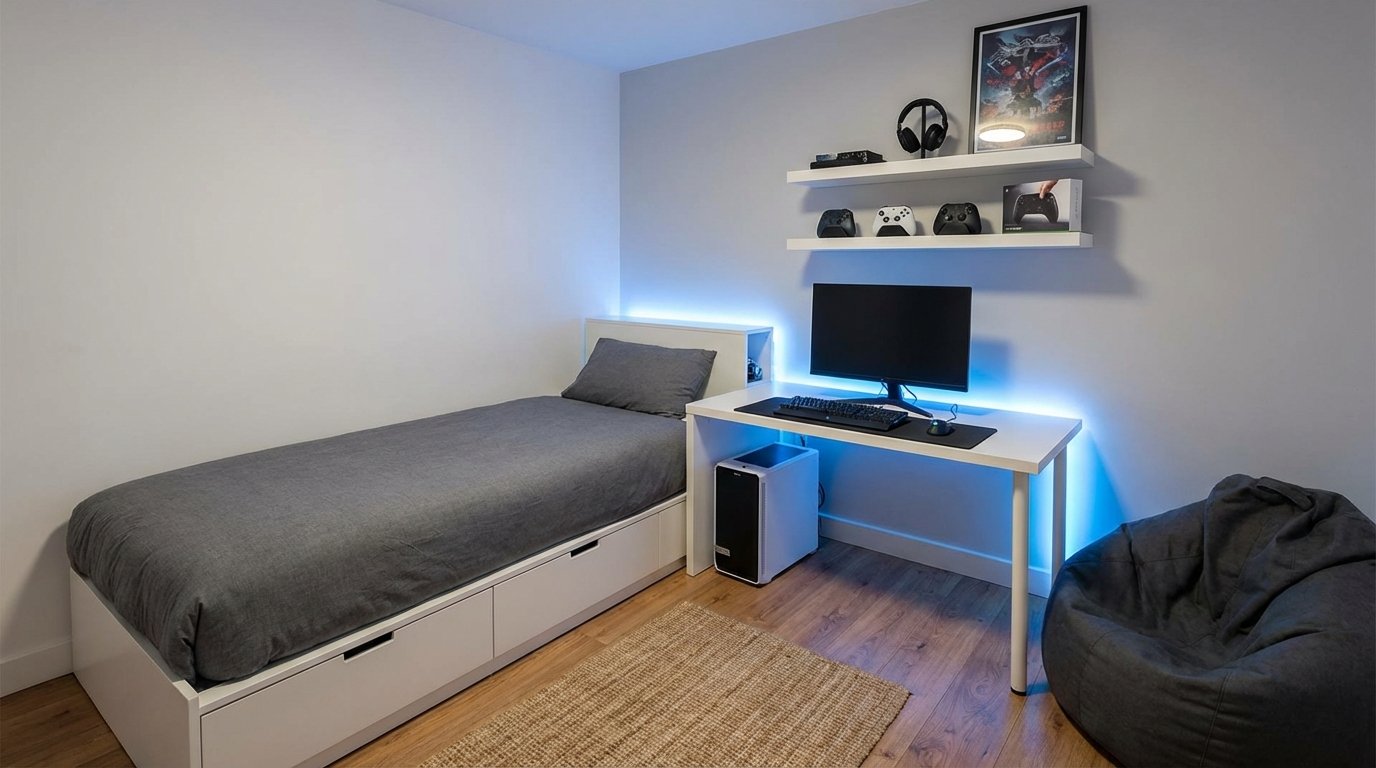
A small gaming room with bed can go wrong very fast. One chair, one monitor, one blanket thrown like a defeated flag, and suddenly the room feels like a cable drawer with a pillow. That is the real issue, I think. Not lack of money always. Not even lack of taste. Mostly, the room is trying to be two things at once, sometimes three. Sleep zone. Battle station. Maybe study corner too, which is honestly a bit rude of the room.
Most regular bedrooms are not giant. In U.S. housing data, standard secondary bedrooms are often discussed around the 10 x 12 foot range, or roughly 120 square feet, while many ergonomic workstation guides still ask for enough depth to keep the monitor at least 20 inches from your eyes. So yes, space runs out quicker than people expect, specially once the bed enters the argument.
That is why the smartest small gaming room ideas with bed are not really about stuffing more stuff in. They are about making one object do two jobs, making one wall carry more weight, making the floor breathe a little. Also lighting. People ignore lighting till the room feels like a convenience store at 1 a.m. and then wonder why sleep gets weird. Light at night can mess with sleep quality, and sleep groups keep repeating that a darker room and dimmer, warmer light before bed helps. Which, honestly, makes perfect sense if you have ever tried to sleep after staring at a blazing blue keyboard for four hours.
Start with the bed, not the desk
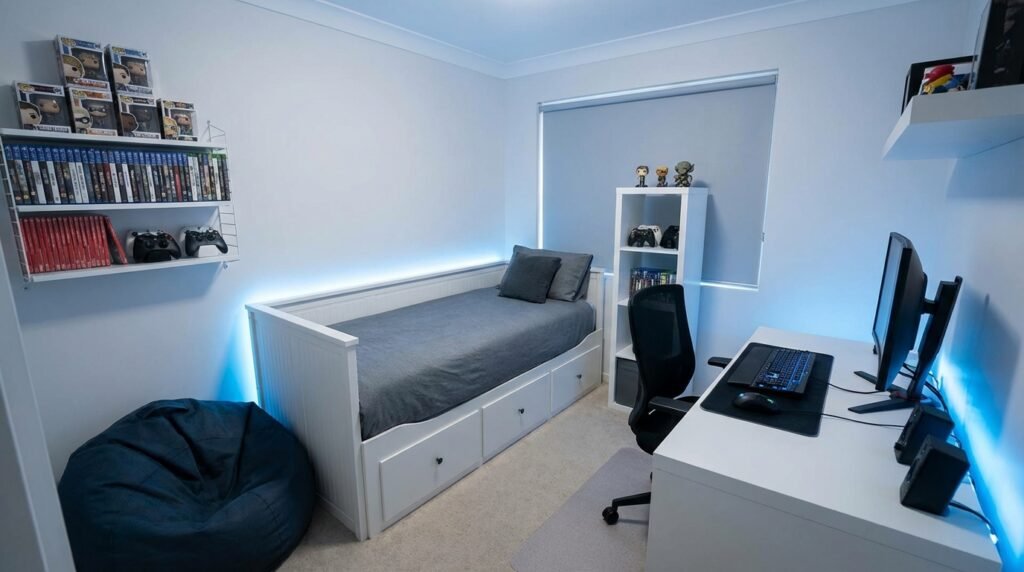
This is where people get stubborn. They buy the desk first because the gaming setup feels exciting, then squeeze the bed in like an apology. Do it the other way around.
The bed is the largest block in the room. It decides the traffic flow, the walking lane, the possible desk width, the storage options, the mood, the whole circus. In a compact room, a single bed, small double, or a platform bed with drawers usually behaves better than a bulky frame with a big headboard that eats half the wall for no good reason. Upholstered giant headboards look nice online, sure, but in a tiny room they can feel like a sofa standing up and judging you.
If the room is very narrow, push the bed to one side and stop trying to float it in the middle like some luxury suite fantasy. A side placed bed opens one clean lane. That clean lane matters more than people realise. You need the room to feel passable, not merely occupied.
Go vertical or suffer sideways
Tiny rooms punish low thinking. By that I mean, if all your storage stays at floor level, the room starts feeling squat and crowded, kind of like it is wearing too many shoes indoors.
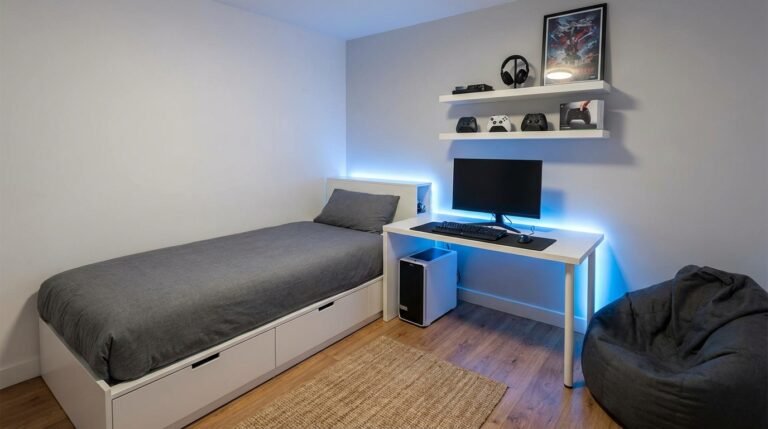
Use the wall. Put floating shelves above the desk, not ten random ones, just enough to hold controllers, game cases, small speakers, a plant if you are feeling optimistic. Add a pegboard if you like swapping accessories around. A narrow wall shelf above the headboard can work too, but don’t turn it into a landslide situation. Nobody wants a collectible figure dropping on their forehead at 3 a.m.
This is one of the best small gaming room ideas with bed because vertical storage leaves the floor less choked. And floor visibility matters more than square footage sometimes. A room can be small and still feel okay if you can see some plain open floor. Strange but true.
A loft bed is not just for kids, and people need to get over that
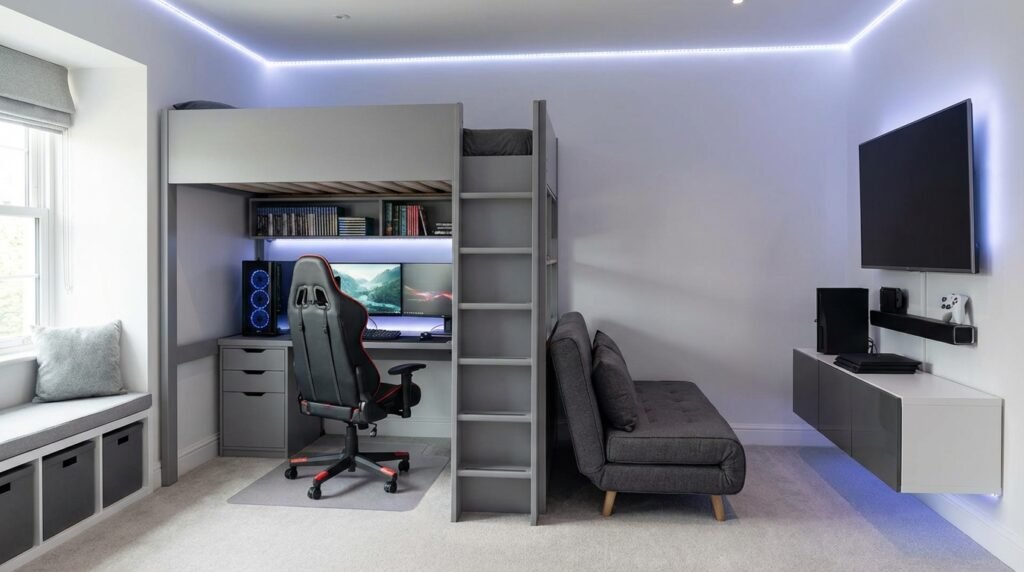
A loft bed gaming setup is still one of the most efficient answers for a room that has to hold both sleep and gaming. Bed goes up. Desk goes under. Basic geometry does the heavy lifting, not magic.
Now, yes, loft beds are not for everyone. Some adults hate climbing up, some rooms have low ceilings, some people move a lot in sleep and do not wish to descend a ladder half awake like a pirate with deadlines. Fair. But if the ceiling allows it, this setup frees a shocking amount of floor area.
There is a reason these layouts keep showing up in student rooms, studio apartments, and tiny urban bedrooms. When floor space is limited, stacking functions beats spreading them. That part is not trendy talk, it is just math wearing jeans.
Daybed, sofa bed, or Murphy bed if the room does too much
If the bedroom is also a guest room, work room, or family overflow zone, a regular bed may be too bossy. This is where a daybed or Murphy bed starts making sense.
A daybed works well if you want the room to feel more like a lounge during the day. Add a wall mounted monitor, a compact desk, maybe a rolling side table, and suddenly it looks intentional, not accidental. Murphy beds are even more aggressive with space saving, though they cost more and need proper installation. Still, when folded up, the room opens in a way that feels almost suspicious.
I knew someone who used a fold down bed with a narrow gaming desk opposite it. Whole room looked tiny on paper, but in person it felt alright, weirdly airy. Not huge, no, but usable. Which is what matters.
Choose a desk that knows its place
A giant gamer desk with wings and shelves and cup holders and enough footprint for a small marriage, that is how small rooms get wrecked.
In compact rooms, the desk should be slim, clean lined, and preferably no deeper than what you need for screen distance and keyboard comfort. OSHA guidance says the desk area should be deep enough to allow the monitor to sit at least 20 inches away, and preferred viewing distance often falls around 20 to 40 inches. That means you do need enough depth, but not absurd depth.
A wall mounted desk, corner desk, or narrow rectangular desk usually works best. If the room has a dead corner, use it. Corners are awkward little freeloaders until you give them a job.
And please, if the room is tiny, think twice before going dual monitor unless you truly need it. A single good monitor on an arm can save both desk width and visual mess. Monitor arms help more than people think. The top of the screen should be at or slightly below eye level, and keeping the display positioned right reduces neck strain. That matters a lot in a room where your gaming and daily life happen in the same few steps.
The under bed area is your unpaid employee
You already paid for the bed. Make it work harder.
Under bed storage is one of the least glamorous but most useful small gaming room ideas with bed. Use flat bins, drawer systems, or vacuum bags for extra bedding, winter clothes, spare cables, controller boxes, even board games if you mix analog chaos with digital chaos.
This matters because clutter in a small room does not stay small. It spreads emotionally. One hoodie on a chair becomes three. One headset on the bed becomes chargers, receipts, mystery screws, old water bottle. You know the pattern. Under bed storage cuts that chain early.
Separate the sleep side from the gaming side, even if only in your head
A lot of people make the whole room look like a gaming zone and then wonder why it does not feel restful. Your brain is not stupid. If the bed sits under RGB glare with action posters looming over it, sleep mode gets a bit confused.
Try creating two micro zones. Not full blown interior design nonsense. Just enough contrast so the room has signals.
Keep the bed area softer. Maybe neutral bedding, warmer lamp, less visual noise. Keep the desk area sharper. Monitor light, shelving, collectibles, headset stand, controller dock. This can be done with color, rug placement, a change in wall art, or even just lighting temperature.
Sleep research keeps pointing the same way on evening light. Dimmer, warmer light supports winding down better than bright, cool light. So if you want LEDs, fine, but use them with some self control. Put them behind the desk, not blasting straight at your pillow like a nightclub having a nervous episode.
Lighting can save the room, or ruin it completely
People obsess over monitor brands and then light the room with one sad ceiling bulb. That is not a plan.
Layer the lighting. One overhead, if needed. One desk light. One warm bedside light. Maybe soft LED strip lighting behind the monitor or under shelves. The point is control. Not brightness for the sake of brightness.
A warm light near the bed is better for late evening, while the desk can take slightly brighter task lighting when you are gaming or working. Sleep experts generally suggest reducing bright light before bed and keeping the sleep space dark when it is time to actually sleep. It sounds obvious, but obvious things are the first to be ignored once RGB enters the room.
Also, hidden lighting does something sneaky in small rooms. It softens hard edges. Makes walls feel less boxed in. Gives depth without stealing an inch. A little trick, but a real one.
Use light colors, then break the rule a little
For a small gaming bedroom, light walls usually help. Off white, soft gray, muted beige, dusty green, pale blue, things like that. Lighter walls bounce more light and reduce that boxed up feeling.
But, and here is where rules get bossy, too much pale color can make the room feel bland. So break it a bit. Maybe one darker wall behind the desk. Maybe black frames, dark shelving, charcoal bedding accents. The trick is contrast with restraint. Not “gaming cave” unless that is fully your thing and you accept the consequences.
A room with bed plus setup already carries visual weight. So let some surfaces rest. Empty wall sections are not wasted. They are breathing room.
Corner layouts are criminally underrated
A lot of tiny rooms work better when the desk takes the corner and the bed takes the longest uninterrupted wall. That leaves the middle open and gives the setup its own tucked in command spot.
A corner gaming desk with bed nearby can feel compact in a good way, sort of efficient rather than cramped. Corners also help with cable routing because you can hide more lines behind the desk and along the wall seam. That matters. Visible cables in a small room are like loose thoughts. They make everything feel messier than it is.
If the window sits in the corner, even better, maybe. Natural light during the day helps the room feel bigger and supports a healthier sleep wake rhythm too. Just watch for glare on the monitor, because glare is one of those tiny annoyances that becomes huge after an hour.
Cable management is not optional in a room this small
In a large room, bad cables are ugly. In a small room, bad cables are the room.
Use under desk trays, cable sleeves, adhesive clips, and one proper power strip mounted neatly. Keep charging stations intentional. Label the plugs if you swap gear often. It sounds fussy, and maybe it is, but once done it changes the room more than buying another accessory ever will.
I have seen tiny setups with mid range gear look fantastic, simply because the lines were clean and nothing looked abandoned. And I have seen expensive setups look like raccoons moved in.
Pick furniture that can move, fold, or hide
Mobility matters in multi use rooms. A rolling drawer unit, folding chair, ottoman with storage, or C table that slides over the bed can all help. Flexible furniture is basically insurance against future frustration.
This matters because your needs shift. Today it is gaming. Next month you need a study area, or a spot for a console, or a printer you already regret owning. Rooms that survive long term are not the most decorated ones. They are the ones that can adapt without a full meltdown.
Do not crowd the walls with too much personality
This one hurts, I know. People love wall decor. Posters, hex lights, shelves, framed art, neon signs, more posters, maybe a sword if judgement has left the building. But in a small gaming room with bed, too much wall action can crush the space.
Choose a focal wall, usually behind the desk or behind the bed, not both at full intensity. Let the other side calm down. Otherwise the room starts shouting from every angle.
Personality should be visible, yes. But not piled up like evidence.
Best layout ideas that usually work
Bed against one wall, desk opposite
Simple and strong. Good for rectangular rooms. Keeps movement easy. Makes the room feel less chopped up.
Bed in a corner, desk under the window
Very practical. Frees the center. Window light helps the desk area during the day. Just manage glare.
Loft bed with setup underneath
Top tier for tiny rooms if ceiling height allows. Great for students, renters, and anyone willing to climb.
Daybed plus wall mounted monitor
Good for multi use rooms. During the day the bed reads like seating, so the room feels less sleep heavy.
Corner desk plus storage bed
One of the safest bets. Not flashy, but very hard to mess up.
What to avoid, because people do these mistakes a lot
Do not buy a bed frame with a bulky footboard in a tiny room. It steals visual space and actual space both.
Do not push giant speakers, large PC tower, oversized chair, and wide desk into one side and expect the room to feel balanced. It will feel like a storage unit with internet.
Do not use bright cool lighting over the bed at night. Sleep folks keep warning that light timing matters. Your room should not look like midday when your body is trying to shut down.
Do not ignore the chair size. Some gaming chairs are too bulky for a tiny bedroom. A more compact ergonomic chair may fit the room better and still feel good over long sessions.
Do not fill every gap with décor. Empty space is doing a job, whether you notice it or not.
Conclusion
The best small gaming room ideas with bed are usually a little boring on the shopping list and very satisfying in real life. Storage bed. Narrow desk. Good chair. Warm bedside light. Clean wall shelves. Monitor arm. Some restraint. That last one, maybe the hardest part.
You do not need a fantasy setup pulled from some impossible apartment on social media. You need a room where you can play for hours, sleep properly, move around without knee collisions, and not feel mildly trapped by your own furniture.
That is the whole thing really. A small room should not try to pretend it is big. It should just be clever. A bit stubborn. A bit neat. Maybe slightly moody. And honest about the fact that the bed is not the problem. The problem is everything people keep trying to pile around it.